
Grocery shopping in Israel can feel simple, until you realize that where you shop can make a big difference to what you pay.
A small neighborhood grocery store is often called a מַכֹּלֶת (makolet). These shops are convenient, friendly, and great when you just need milk, bread, or something quick. But they are usually more expensive than a large supermarket.
A supermarket is usually called a סוּפֶּר (super), short for supermarket. Bigger chains often have better prices, more choice, and more regular deals. If you are doing a full weekly shop, the super is usually better value.
Then there is the קִיוֹסְק (kiosk), a small convenience stand or shop. Kiosks are useful when you are out and about, but they are often the most expensive option, especially for drinks, snacks, and small everyday items.
One good habit in Israel is to check individual prices carefully. A product may look cheap because it is on מִבְצָע (mivtza), meaning a sale or special offer, but it is still worth comparing prices between shops and chains.
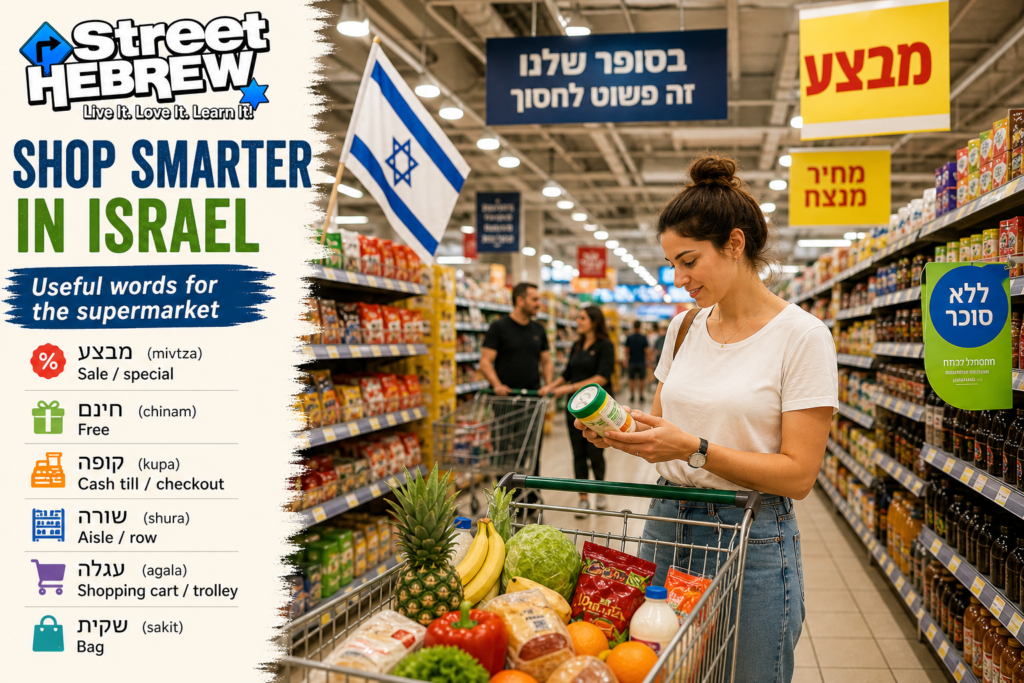
Useful Grocery Store Vocabulary
Sale / special offer: מִבְצָע (mivtza)
Free: חִנָּם (chinam)
Cash till / checkout: קֻפָּה (kupa)
Aisle / row: שׁוּרָה (shura)
Shopping cart / trolley: עֲגָלָה (agala)
Bag: שַׂקִּית (sakit)
Receipt: קַבָּלָה (kabala)
How much does it cost? כַּמָּה זֶה עוֹלֶה? (kama zeh oleh?)
Book your free lesson
Street Hebrew helps Anglos and olim handle real-life Hebrew in Israel, from shops and schools to gas stations, appointments, and everyday conversations.