
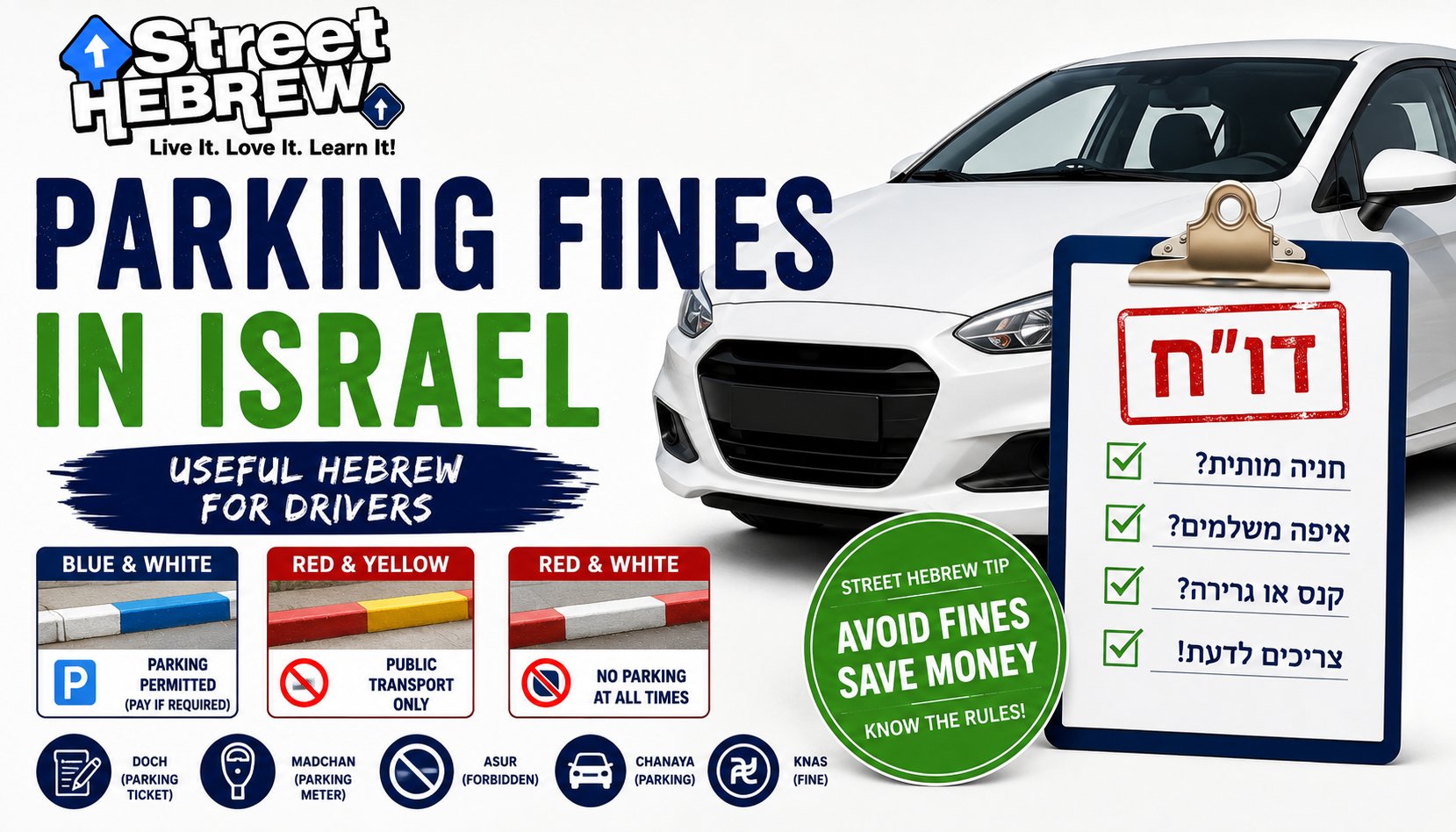

Parking in Israel
Parking in Israel can be confusing, especially if you are new to the country.
In many cities, parking rules are shown by coloured markings on the curb rather than on the road itself. These markings can tell you whether parking is allowed, paid, restricted, or completely forbidden.
The problem is that the rules are not always obvious, and the signs are usually in Hebrew.
That is why a few basic parking words can save you money, stress, and a very annoying ticket on your windshield.
Common Curb Colours in Israel
Blue and White: Paid or Regulated Parking
Blue and white curb markings usually mean that parking is allowed, but payment or a local parking permit may be required.
You may need to pay using a parking app, meter, or local payment system. Always check the nearby signs, because the rules can change depending on the city, street, time of day, and resident parking arrangements.
Red and White: No Parking
Red and white curb markings usually mean that parking is forbidden.
In most cases, you should not park there at all. Parking on red and white can lead to a fine, and in some places your car may also be towed.
Red and Yellow: Public Transport Area
Red and yellow curb markings usually mean the area is reserved for public transport, such as buses or taxis.
Private vehicles should not park there. These areas are often near bus stops or public transport lanes.
Always Check the Signs
The curb colour is only part of the story.
In Israel, there are often signs on the sidewalk that explain the specific rules for that street. These signs may include:
Parking hours
Resident-only parking
Payment requirements
Loading and unloading rules
Disabled parking restrictions
Public transport restrictions
If you are not sure, it is better to stop, read the sign carefully, or ask someone nearby.
Useful Words for Parking Fines
Parking ticket: דּוּ״ח (doch)
Parking meter: מַדְחָן (madchan)
Forbidden: אָסוּר (asur)
Parking: חֲנָיָה (chanaya)
Fine: קְנָס (knas)
Curb: שְׂפַת מִדְרָכָה (sfat midracha)
Sidewalk: מִדְרָכָה (midracha)
Disabled parking: חֲנָיַת נָכֶה (chanayat nacheh)
Tow truck: גְּרָר (grar)
Towed: נִגְרַר (nigrar)
Payment: תַּשְׁלוּם (tashlum)
Sign: שֶׁלֶט (shelet)
Resident parking permit: תַּו חֲנָיָה לְתוֹשָׁב (tav chanaya le-toshav)
Parking inspector: פַּקָּח חֲנָיָה (pakach chanaya)
Useful Phrases for Parking in Israel
Is parking allowed here?
מֻתָּר לַחֲנוֹת כָּאן?
Mutar lachanot kan?
Is it forbidden to park here?
אָסוּר לַחֲנוֹת כָּאן?
Asur lachanot kan?
Do I need to pay for parking?
צָרִיךְ לְשַׁלֵּם עַל חֲנָיָה?
Tzarich leshalem al chanaya?
Where do I pay?
אֵיפֹה מְשַׁלְּמִים?
Eifo meshalmim?
Is this only for residents?
זֶה רַק לְתוֹשָׁבִים?
Ze rak le-toshavim?
Can I park here with an app?
אֶפְשָׁר לַחֲנוֹת כָּאן עִם אַפְּלִיקַצְיָה?
Efshar lachanot kan im aplikatzya?
I got a parking ticket.
קִבַּלְתִּי דּוּ״ח חֲנָיָה.
Kibalti doch chanaya.
Where can I pay the fine?
אֵיפֹה אֶפְשָׁר לְשַׁלֵּם אֶת הַקְּנָס?
Eifo efshar leshalem et ha-knas?
My car was towed.
הָרֶכֶב שֶׁלִּי נִגְרַר.
Ha-rechev sheli nigrar.