
What Is a Shuk?
If you want to experience real Israeli life, there are few better places to start than the shuk.
A shuk is an outdoor market, but in Israel it is much more than that. It is noisy, colourful, busy, direct, full of smells, full of people, and full of everyday Hebrew.
Two of the most famous shuks in Israel are Shuk HaCarmel in Tel Aviv and Machane Yehuda in Jerusalem.
Why Visit the Shuk?
The shuk is a great place to buy fresh fruit, vegetables, spices, nuts, seeds, baked goods, household items, clothes, and quick street food.
You will often find a wide variety of produce, and prices can sometimes be cheaper than supermarkets or regular fruit and vegetable shops. But the real experience is not only the shopping. It is the atmosphere.
The shuk is loud, fast, warm, friendly, impatient, funny, and very Israeli.
In other words, it is a perfect place to practise your Street Hebrew.
Shuk HaCarmel in Tel Aviv
Shuk HaCarmel is one of Tel Aviv’s best-known markets. It is a lively place to walk around, hear real Hebrew, grab something to eat, and practise simple everyday phrases.
You will hear vendors calling out prices, people asking questions, and shoppers moving quickly from stall to stall.
It is a great place to practise Hebrew for buying fruit and vegetables, asking prices, ordering food, understanding numbers, and listening to fast, natural Hebrew.
Machane Yehuda in Jerusalem
Machane Yehuda, often called simply the shuk by Jerusalem locals, is one of the most famous markets in Israel.
During the day, it is full of food stalls, fruit and veg stands, spice shops, bakeries, fish shops, meat shops, cafés, and small restaurants. It is also a wonderful place to hear different kinds of Hebrew from shopkeepers, families, students, tourists, and locals.
Machane Yehuda feels traditional, modern, loud, warm, and full of life all at once.
For Hebrew learners, it is one of the best real-life classrooms in the country.
Useful Words for the Shuk
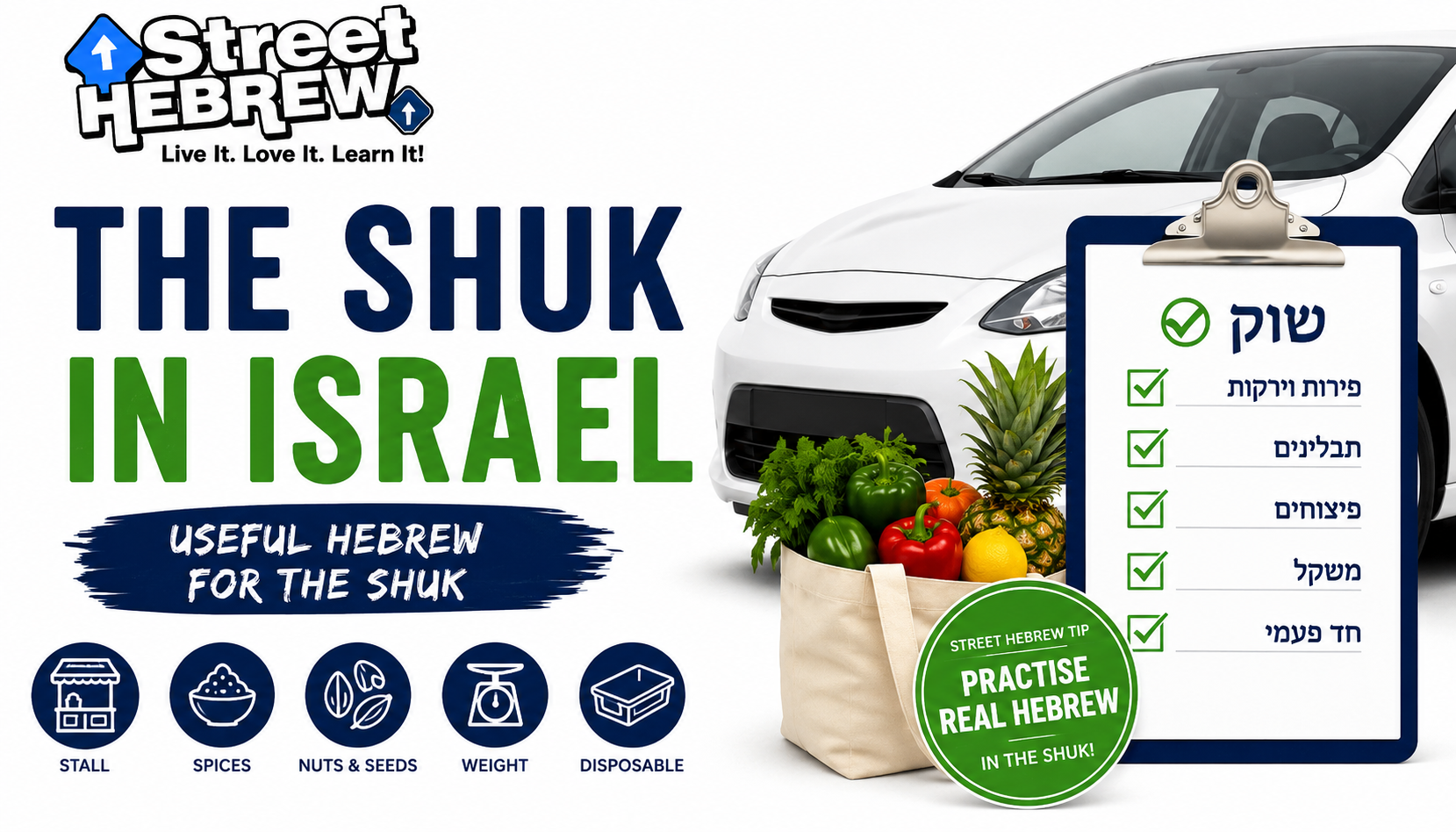
Market stall: דּוּכָן (duchan)
Spices: תַּבְלִינִים (tavlinim)
Nuts and seeds: פִּיצוּחִים (pitzuchim)
Weight: מִשְׁקָל (mishkal)
Disposable: חַד פַּעֲמִי (chad pa’ami)
Fruit: פֵּירוֹת (peirot)
Vegetables: יְרָקוֹת (yerakot)
Price: מְחִיר (mechir)
Sale / special offer: מִבְצָע (mivtza)
Bag: שַׂקִּית (sakit)
Kilo: קִילוֹ (kilo)
Half a kilo: חֲצִי קִילוֹ (chatzi kilo)
Fresh: טָרִי (tari)
Expensive: יָקָר (yakar)
Cheap: זוֹל (zol)
Cash: מְזוּמָן (mezuman)
Credit card: כַּרְטִיס אַשְׁרַאי (kartis ashray)
Receipt: קַבָּלָה (kabala)
Street Hebrew Tip
When you go to the shuk, don’t try to understand everything.
Choose two or three phrases before you go and practise only those.
For example:
How much does this cost?
כַּמָּה זֶה עוֹלֶה?
Kama ze oleh?
How much per kilo?
כַּמָּה לְקִילוֹ?
Kama le-kilo?
Can I have a bag?
אֶפְשָׁר שַׂקִּית?
Efshar sakit?
Book your free lesson
Street Hebrew helps Anglos and olim handle real-life Hebrew in Israel, from shops and schools to gas stations, appointments, and everyday conversations.