
Why Fish Names Can Be Confusing
If you’re used to buying fish in the U.K., U.S., or Europe, the fish counter in Israel can feel a little different. Some names are familiar, some are translated oddly, and some sound like they belong to people, animals, or biblical characters rather than dinner.
Israel has a wide range of fresh, frozen, local, and imported fish. In general, local frozen fish is usually cheaper, while imported fresh fish tends to be more expensive. You’ll often find a white frozen fish in supermarkets called נְסִיכַת הַנִּילוּס (nesichat haNilus), meaning Nile perch. It is popular, reasonably priced, and useful for simple baked or fried fish dishes.
Fresh, Frozen, Whole, or Filleted?
One useful thing to know is that buying a whole fish, or דָּג שָׁלֵם (dag shalem), can sometimes be better value than buying ready-cut fillets. If you’re comfortable asking, many fish shops can clean, cut, or fillet the fish for you.
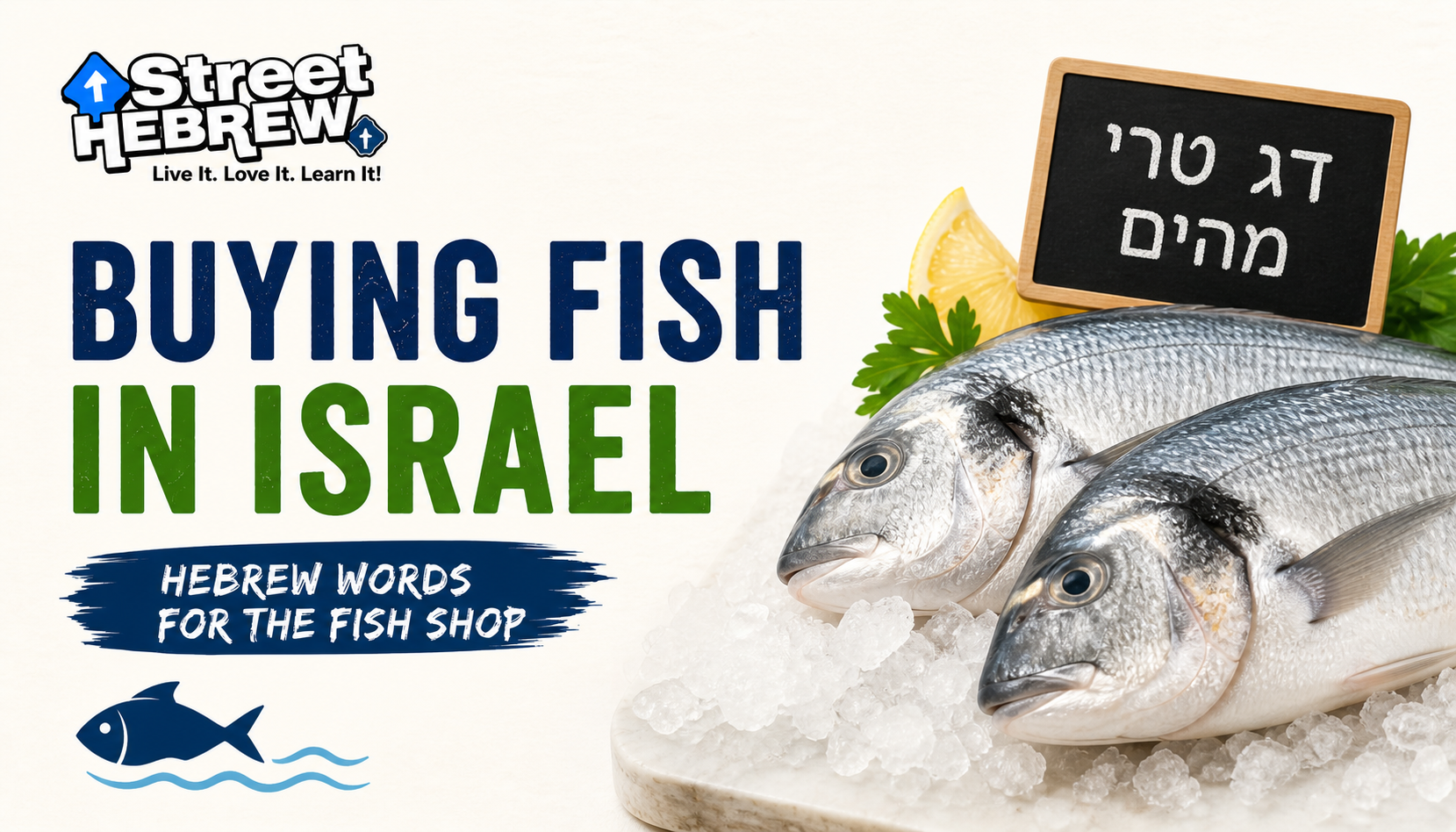
Frozen fish, דָּג קָפוּא (dag kafu), is convenient and usually cheaper. Fresh fish, דָּג טָרִי (dag tari), may taste better, but it often costs more, especially if imported.
Common Fish Names in Hebrew
Carp: קַרְפִּיוֹן (karpion)
Cod: בַּקָּלָה (bakala)
Halibut: הַלִיבּוּט (halibut)
Sea bream: דֵּנִיס (denis)
Nile perch: נְסִיכַת הַנִּילוּס (nesichat haNilus)
Haddock: חֲמוֹר יָם (chamor yam)
Plaice: דָּג מֹשֶׁה רַבֵּנוּ (dag Moshe Rabbeinu)
Salmon: סַלְמוֹן (salmon)
Sole: סוֹל (sol)
Tilapia: אַמְנוּן (amnon)
Trout: פוֹרֶל (forel)
Some of these names are quite funny when translated literally. חֲמוֹר יָם means “sea donkey,” דָּג מֹשֶׁה רַבֵּנוּ means “Moses our teacher fish,” and אַמְנוּן is also a Hebrew first name.
Useful Fish Shop Vocabulary
Fish: דָּג (dag)
Whole fish: דָּג שָׁלֵם (dag shalem)
Bones: עֲצָמוֹת (atzamot)
Skin: עוֹר (or)
Frozen: קָפוּא (kafu)
Fresh: טָרִי (tari)
Fillet: פִילֶה (fileh)
Can you clean it? אַתָּה יָכוֹל לְנַקּוֹת אֶת זֶה? (ata yachol lenakot et ze?)
Book your free lesson
Street Hebrew helps Anglos and olim handle real-life Hebrew in Israel, from shops and schools to gas stations, appointments, and everyday conversations.