

Gas stations in Israel can feel simple enough until the attendant starts asking questions quickly in Hebrew. A little vocabulary, and a little local knowledge, can save you money and a few awkward moments.
First, fuel prices can vary from place to place. Stations in cities are often more expensive, while some stations in less central areas may be cheaper. In Israel, official fuel prices usually change once a month, so drivers often have a general idea of what they’ll be paying.
One useful thing to know is the difference between self-service and attendant service.
Self-service is called שֵׁירוּת עַצְמִי (sheirut atzmi).
Attendant service is called שֵׁירוּת מָלֵא (sheirut maleh).
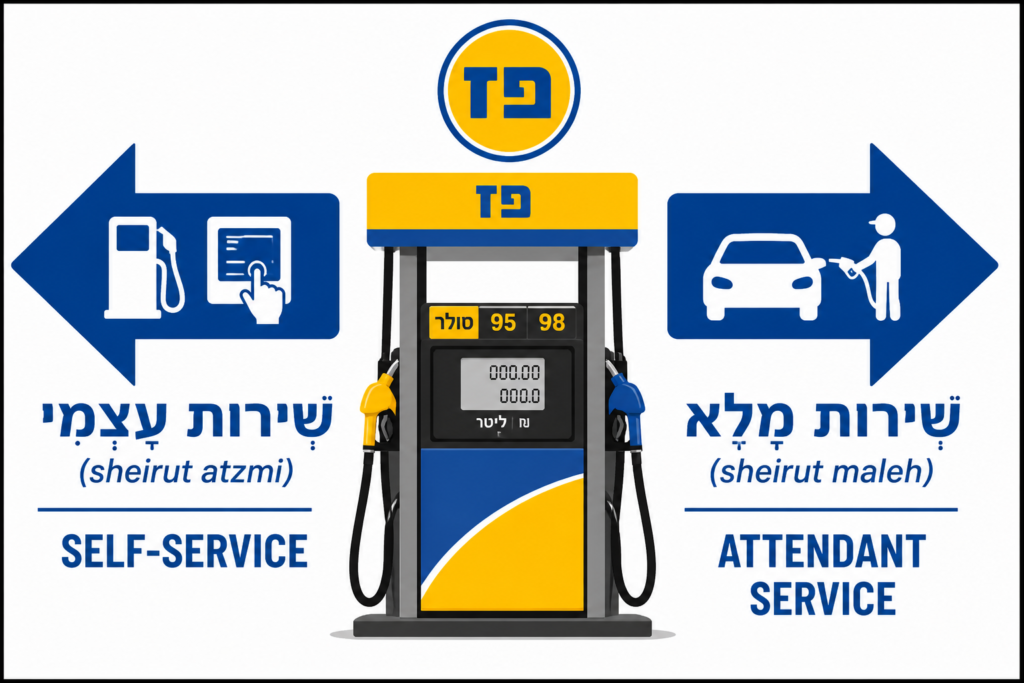
Attendant service usually costs a little more per liter, so if you’re comfortable filling the car yourself, self-service can save money. Just note that self-service usually requires a credit card.
Attendants may also ask if you want them to check your oil or water. That can be helpful if you genuinely need it, but products like oil or windscreen wash are often more expensive at roadside stations. If your car is fine, it’s perfectly okay to politely decline and keep things simple.
Useful Gas Station Vocabulary
Gas / petrol station: תַּחֲנַת דֶּלֶק (tachanat delek)
Unleaded 95: בֶּנְזִין תִּשְׁעִים וָחָמֵשׁ (benzin tish’im vachamesh)
Diesel: סוֹלָר (solar)
Windscreen wash: מַיִם כְּחֻלִּים (mayim kchulim)
Coolant: מַיִם יְרֻקִּים (mayim yerukim)
Per liter: לְלִיטֶר (le-liter)
Credit card: כַּרְטִיס אַשְׁרַאי (kartis ashrai)
Book your free lesson
Street Hebrew helps Anglos and olim handle real-life Hebrew in Israel, from shops and schools to gas stations, appointments, and everyday conversations.