

Why Taxi Hebrew Matters
Taking a taxi in Israel is usually simple, but it helps to know a few important words before you get in. Between tariffs, meters, luggage fees, and fast Hebrew from the driver, one short ride can suddenly become a small language lesson.
In Israel, taxi fares are generally based on different rates, called tariffs. Tariff 1 is the regular daytime rate, while Tariff 2 is the more expensive night, Shabbat, and holiday rate. Some sources note that the higher rate can be around 25% more expensive than the regular fare.
The Meter: Know the Word
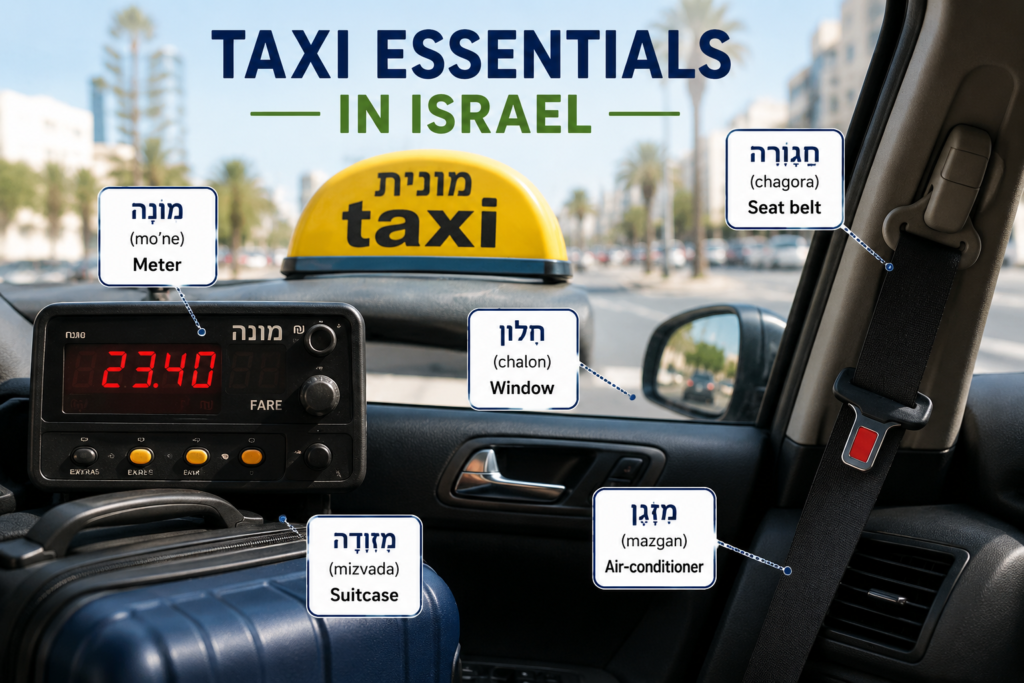
The most important taxi word is מוֹנֶה (moneh), meaning meter.
In general, taxi drivers in Israel are required to use the meter for local rides, unless a fixed price has been agreed in advance between the driver and passenger. This is especially important if you are not sure what the journey should cost.
A very useful phrase is:
תַּפְעִיל מוֹנֶה, בְּבַקָּשָׁה
taf’il moneh, bevakasha
Please turn on the meter.
Extra Charges to Know
Some taxi rides may include extra charges. For example, ordering a taxi by phone can sometimes add a small fee, and luggage may also carry an additional charge depending on the situation.
It is always fine to ask before the ride begins:
כַּמָּה זֶה יַעֲלֶה?
kama zeh ya’aleh?
How much will it cost?
Useful Taxi Vocabulary
Taxi driver: נַהַג מוֹנִית (nahag monit)
Taxi: מוֹנִית (monit)
Meter: מוֹנֶה (moneh)
Seat belt: חֲגוֹרָה (chagora)
Window: חַלּוֹן (chalon)
Suitcase: מִזְוָדָה (mizvada)
Air conditioner: מַזְגָּן (mazgan)
Receipt: קַבָּלָה (kabala)
Address: כְּתֹבֶת (ktovet)
Stop here: תַּעֲצֹר כָּאן (ta’atzor kan)
Book your free lesson
Street Hebrew helps Anglos and olim handle real-life Hebrew in Israel, from shops and schools to gas stations, appointments, and everyday conversations.